Tuesday, January 25, 2011

Kumar tuli - The craddle of Indian Idols


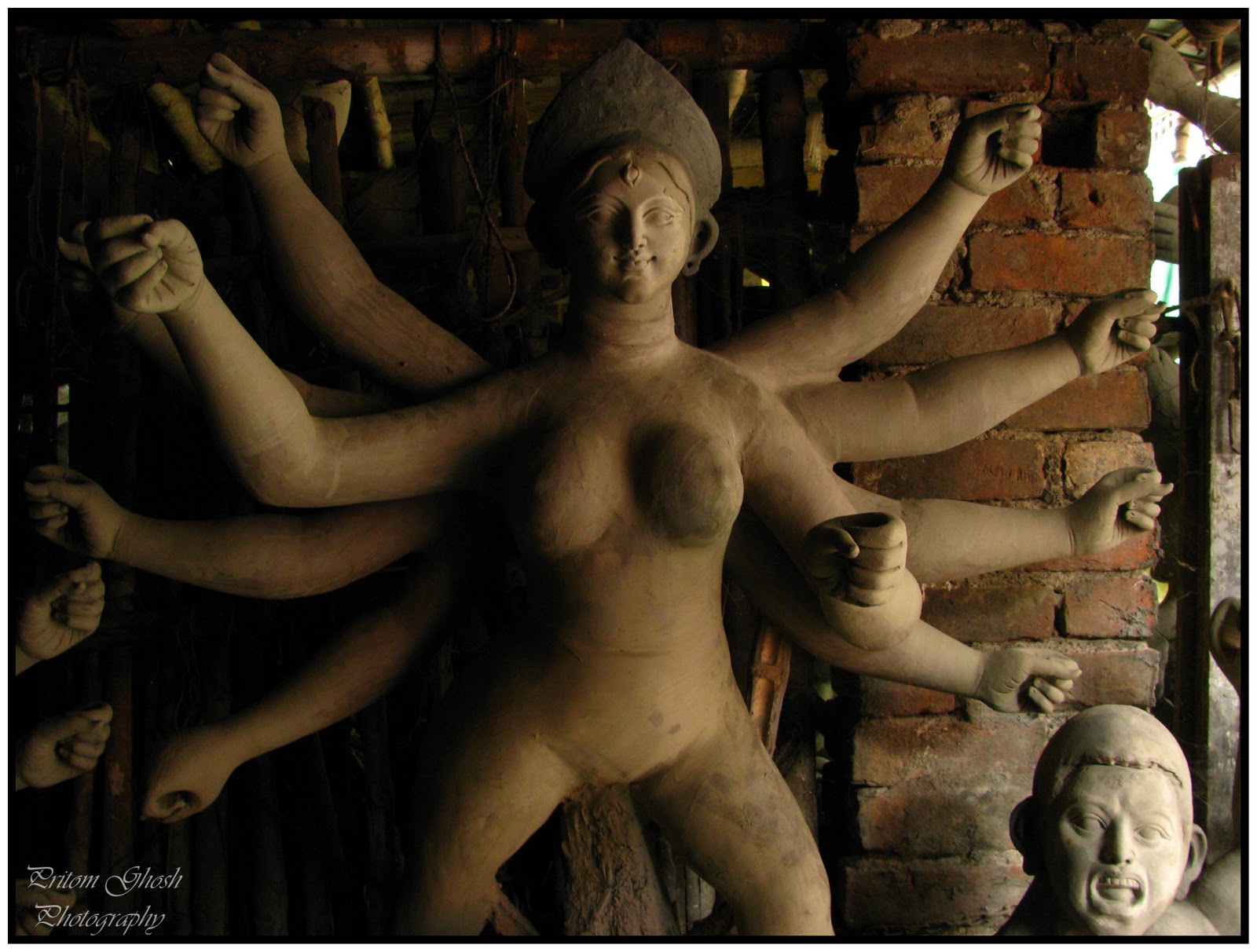
Kumartuli a traditional potter's colony in northern kolkata produces clay idols of hindu gods & goddesses during traditional pujas , durga puja being the most prominent this potter's town is both home & workshop to more than one hundred and fifty families.


Kumartuli the clay model-makers haven, is older than Calcutta, which grew out of three little villages, viz., Gobindapore, Kalikutta and Sutanooti way back in 1690.
In those days families used to invite  'kumhors' in their house  as a guest about a week before  Durga puja  & the artisian would create the idol . The popular saying is that the tradition of strting durgapuja was started by raja naba krishna deb of Sobhabazar in honour of the British victory in the Battle of Palassey  in 1757 , so he summoned a kumar from Krishnanagar to make the clay image for his puja. Eventually several other well-to-do families wanted to follow the Raja's example. As a result the kumar was inundated with work and complaining because he had to travel from Krishnanagar asked for a permanent residence for himself and his apprentices, so the Raja lobbied to british  for such settlement  The British Est India company decided to built new settlement at a site in gobindapur which is known as Fort william , as a result of these new settlement policies old settlers were forcefully uprooted . John Zephaniah Holwell( a surgeon & an  employee of east india company,  later governor of bengal (1760))  under orders from the  directors of the company  alloted separate  districts to the company  workmen .These neighbourhoods in the heart of the Indian quarters acquired the work-related names – Suriparah (the place of wine sellers), Collotollah (the place of oil men), Chuttarparah (the place of carpenters), Aheeritollah (cowherd’s quarters), Coomartolly (potters’ quarters) and so on .
Many of the kumars who first settled in Kumartuli were probably from Krishnanagar although today they come from various districts, since in those days  due to Hindu caste system  children used to continue their parent;s profession the tradition of  the artisians continued  for generations after generation .
Today Kumartuli   is popular in entire world , i have personally met photographers & art researchers from across the world , who are amazed at the art which these artisians produce years after years  as the Bengali diaspora  has spread across the nation the demand for idols  has spread   beyond the borders of india , their work is being acknowledged & appreciated  in various parts of India & world , in recent years Kumartuli has supplied images to 90 countries across the world and new nations are being added to the list.
A spokesman of Kumartuli Shilpi Sangha (KSS), an association of the craftsmen, said the NRIs of countries like Hungary, Bulgaria, Russia, Austria and Poland, come to Kumortuli to buy images. U.S. based NRIs, including the Bengali Association of Southern California, Bengali Association of Greater Chicago, Dakshini, Sanskriti, Garden State Puja Committee of New Jersey, East Coast Durga Puja Committee of New York, come to Kumartuli to select deities to ship to their cities. Additionally, hundreds of agents in Kolkata service NRIs seeking idols from Kumortuli.



Monday, January 24, 2011

Horse show

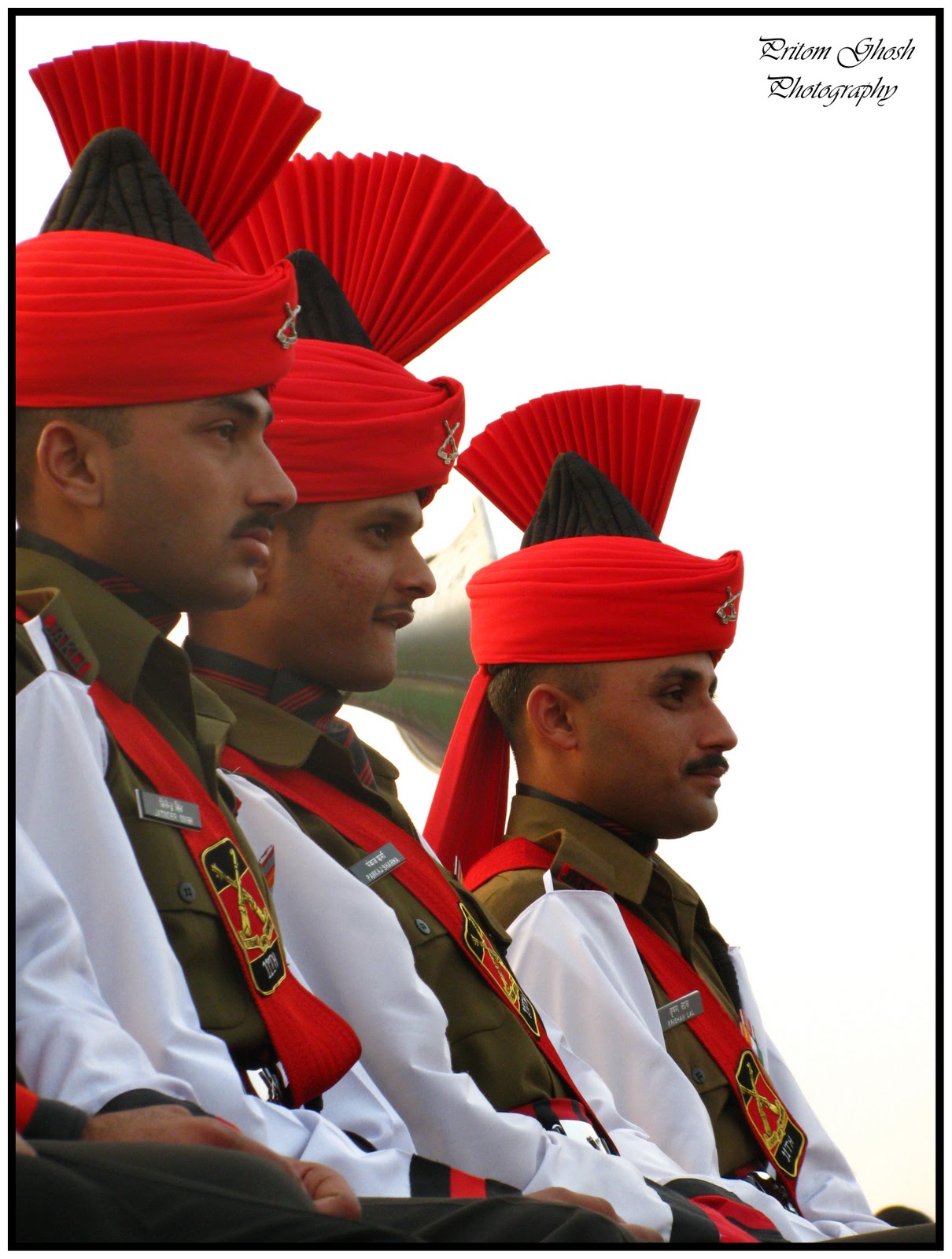
A horse show was organizwd by the Indian army @ the race course , Patwilliamson ground ,Calcutta
Generally every year  in the month of December  , Indian army organizes such events , the major events are organizing polo matches , celebrating Vijay  divas on 16 th december , horse show - where various horse stunts are exhibited , as a photographer it's sheer delight to watch those  great arabian horses perform some breath taking stunts .


National -35 sprinty c - a fascinating tale of india's first attempt at camera manufacturing

 I am always  fascinated by  vintage cameras , this camera belongs to my brother’s father – in – law , knowing my passion for photography he was gracious enough to give me so that I can shoot this as a subject . This is national -35  sprinty c  , this camera was enacted during mid 1970s in a CSIR(centre for scientific & industrial research ) facility, National Instruments, at Calcutta. The camera sports the tag, National 35 Sprinty C. It retailed for Rs 780 in 1977. The issues of India Today and Sunday carried the advertisements for the camera in their late 1970s issues.

This camera   was actually made in Germany as Regula Sprinty C  by a not so well known German camera manufacturer, King KG. When King KG found the going tough during the 1970s in its camera business due to intense competition from other manufacturers in terms of both pricing & quality, it was slowly losing interest in camera manufacturing. In 1977, the designs, tool kits and all the necessary infrastructure to produce NSP SBC was bought by National Instruments, Calcutta. There are no figures about how many units National Instruments manufactured and sold.In those days  India had a soviet style of approach towards industrial enterprises , they were named PSU(public sector units ) even though  some dozen of those PSU  are still functioning  even in today’s cut throat market economy , but national instruments camera manufacturing  project had to be aborted , one can see the  industrial ruins   for this I will recommend  this blog


  <a href="http://darklythroughalens.wordpress.com/2010/01/02/the-autopsy-of-the-great-indian-camera-1/" rel="nofollow">darklythroughalens.wordpress.com/2010/01/02/the-autopsy-o...</a>

You can  see  some  interesting insights into India's only attempt at camera manufacturing by two independent photographers, Manas Bhattacharya and Madhuban Mitra.

Family heritage

This is a kodak brownie E - six 20 , 63 yr old camera , this camera belonged to my father's uncle( my grand mother's brother ) Mr. Ronojit Roy who was a professional photographer , though my father doesn't share the passion & interest that i have in photography , but he took care to see that this was properly maintained . This is my tribute to my father's uncle who started photography way back before 1947 when photography was at it's nascent stage in India .
Type: Box rollfilm
Introduced: 1947
Discontinued: 1957 Film size: 620 Picture size: 2 1/4 X 3 1/4" Manufactured: UK Lens: Meniscus f/11, 100mm, with portrait lens Shutter
Description: Imitation pigskin covered metal body; two brilliant finders; yellow filter; 2-pin flash contacts; shutter safety catch; tripod sockets; cable release socket. 1947-53: vertically striped front; metal wind knob and release button. 1953-57: horizontally striped front; plastic wind knob and release button; triangular spring back catch.

silhouette

In photography  silhouette is described as  an outline of the subject which appears against  a light background . The subject is  a dark or black  shape without any detail against a  light background . The outcome is  very artistic .


“Before you  shoot  an irresistible subject , mute all ur senses  except sight to find out how much is left for the camera to record “- Andreas Bernhard lyonel  Feininger (27.12.1906-18.2.1999)

Sunday, January 23, 2011

Faces


" If an image is going to touch my heart, it will touch the hearts of others also"- Reza Deghati
He  was awarded the prestigious “Missouri Honor Medal for Distinguished Services in Journalism from the Missouri School of Journalism , in September 2006, in "recognition of his lifelong contributions, through brilliant photojournalism, to justice and dignity for the world’s citizens".
born 1952 in Tabriz, Iran Reza Deghati is an Iranian-French photojournalist, who works under the name Reza .